HOT Search
Hot News

Product recommendation


Over the past decade, the smart home market has experienced rapid growth, but the industry has never been able to completely solve the core problem of fragmentation in the home ecosystem — different brands have their own closed platform systems, different communication protocols are incompatible with each other, and there are clear boundaries between different ecosystems.

When purchasing a smart home appliance , consumers cannot simply choose their favorite brand . They often need to confirm in advance whether they belong to the Apple ecosystem , Huawei ecosystem , Xiaomi ecosystem , or other brand's self-built ecosystem before making a purchase decision.
The emergence of the Matter protocol is accelerating the change in this industry logic where consumers are caught up in the home ecosystem.
The Matter protocol is not a technology that makes devices "smarter." Its core value lies not in creating new functions, but in enabling smart home devices to work collaboratively across platforms, brands, and ecosystems. When smart appliances integrate the Matter module, they can more smoothly integrate into mainstream smart home ecosystems such as Apple, Google, and Samsung , achieving broader compatibility and lower barriers to ecosystem access.
For smart home device manufacturers, the Matter protocol primarily enhances market coverage . In traditional development models, if a smart device wants to enter multiple ecosystem platforms simultaneously, it often requires separate adaptation , development , and testing for each platform . However, by integrating the Matter module , developers can achieve "one-time development, multi-ecosystem platform compatibility," thereby helping smart home device manufacturers reduce R&D resource investment, shorten product launch cycles, and enable their products to cover a wider user base and ecosystem market .
For consumers, the Matter protocol requires devices to support local network operation, and devices can interact directly through a local area network, which can significantly reduce the uncertainty caused by network interruption/latency. At the same time, the Matter protocol also supports multiple device pairing methods such as QR code, BLE, NFC, and Wi-Fi, which can effectively reduce the operational complexity on the user side.
For home energy management, the Matter protocol brings improvements in device collaboration and energy efficiency. Traditional energy management solutions often suffer from brand fragmentation and platform closure, making it difficult for different devices to achieve unified collaboration. However, after integrating the Matter module, devices can share energy status, electricity price information, and control strategies based on a unified data model.
Home appliances can also dynamically optimize their working modes according to the home's energy consumption strategy, thereby helping users reduce energy costs and improve the overall energy management efficiency of the home.
Currently, to meet different application needs, Matter module solutions on the market typically cover two mainstream technology routes: Matter over Thread and Matter over Wi-Fi, providing smart home device manufacturers with more flexible product design options.

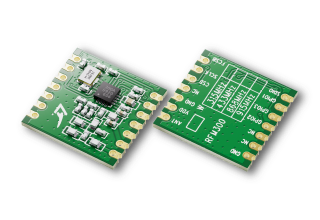
For example , the HM-MT2401 is a Matter over Thread wireless communication module based on the 2.4GHz band . It utilizes the high-performance, highly integrated RF processing chip EFR32MG24, with an embedded 32-bit ARM® Cortex®-M33 core, supporting wireless communication technologies such as Matter, Thread, and BLE.
It can be used in low-power terminal devices such as door locks, sensors, smart switches, and thermostats, helping traditional products quickly upgrade to smart home devices that meet the Matter standard.

The HM-MT7201 is a Matter over Wi-Fi wireless communication module based on the 2.4 GHz band. It is a highly integrated single-chip Wi-Fi 802.11b/g/n and Bluetooth Low Energy (BLE) solution designed for compact applications. Internally, it integrates a powerful 32-bit MCU and a comprehensive set of peripheral interfaces, offering high integration and low power consumption in a tiny package .
For home appliances such as TVs and cameras that require high-bandwidth communication capabilities, this type of Matter over Wi-Fi solution can more efficiently achieve device networking and scene linkage.
Compared to traditional development models, modular Matter solutions not only lower the barrier to entry for Matter development but also help manufacturers complete intelligent upgrades at a lower cost and in a shorter cycle (increasing R&D speed by up to 70%).
Developers do not need to start building from the underlying protocols or RF systems; they can simply connect to the existing main control system through standard interfaces to quickly complete product development , accelerating product verification, certification, and time-to-market.

https://www.hoperf.com/service/apply/
If you are interested in HOPERF's independently developed Matter modules, please scan the QR code above or copy and open the link at the end of the article to apply for samples. We will be happy to serve you!