HOT Search
Hot News

Product recommendation
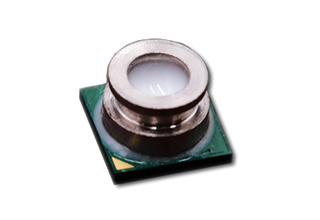
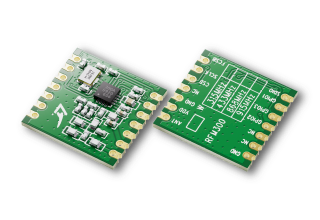
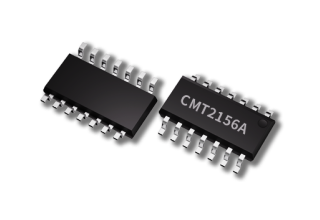


As the industry continues to evolve from "Internet of Everything" to "Intelligent Internet of Everything," Low Power Wide Area Network (LPWAN) is a key technology solution to support the large-scale wireless access of massive IoT terminals . It not only needs to have wide coverage and strong link communication capabilities, but also needs to take into account engineering implementation factors such as terminal integration, service response time and overall deployment cost.

Against this backdrop , Sub-GHz SoC , a single-chip communication solution designed specifically for wireless interaction with IoT terminals, highly integrates core functions such as RF signal transmission and reception, low-power communication control, wireless protocol stack operation, and main control logic processing into a single chip. It can significantly improve the hardware integration of the system while ensuring a high link budget, and is one of the core communication units for efficiently connecting the IoT sensing layer and the transmission layer.
Taking the CMT2392F512, a Sub-GHz SoC integrating a 32-bit ARM Cortex ™ -M4F core and an ultra-low-power RF transceiver, as an example, it operates in the 113–960MHz frequency band, has a transmit power of +20dBm and a receive sensitivity of -122dBm, supports modulation methods such as OOK, (G)FSK, and 4(G)FSK, and supports multiple data packet formats and encoding/decoding methods, which can flexibly meet the wireless communication needs of various applications such as automatic meter reading, building automation, and intelligent security.

In terms of hardware configuration, the CMT2392F512 integrates a high-performance core and RF transceiver, supports single-cycle hardware multiplication and division instructions, DSP instructions and MPU, and integrates 512KB Flash and 144KB SRAM on-chip.
It can not only run wireless communication protocols and data packet processing logic, but also undertake a certain degree of local data processing and control tasks. It can effectively solve the shortcomings of low-power IoT terminals in terms of insufficient resources and inability to take into account both RF communication and local logic processing, thereby meeting the real-time and multi-task scheduling requirements of industrial monitoring, smart meter reading and other devices.
In terms of communication protocol flexibility, the CMT2392F512 does not have a built-in fixed standard protocol stack, but provides a configurable physical layer (OOK, (G)FSK, 4FSK) and a variety of packet processing mechanisms, enabling developers to build custom communication protocols on this basis. This architecture provides the system with a high degree of freedom in protocol design, which can realize differentiated functions and facilitate the connection or reuse of existing Sub-GHz private wireless systems.
In terms of communication speed, the CMT2392F512 supports adjustable data rates in the range of 0.1~1000 kbps, enabling the system to flexibly balance communication distance, speed and power consumption.
In terms of anti-interference and link stability, the CMT2392F512 integrates multiple functions, including channel listening (CCA), high-precision RSSI measurement, fast frequency hopping (FHSS), and squelch control, which can improve the reliability and stability of system communication.
Among them, channel listening can assess channel occupancy before transmission and reduce the probability of co-channel collisions; the frequency hopping mechanism can dynamically switch the working channel in environments with continuous interference; RSSI can be used for link quality assessment and adaptive power control; and the squelch mechanism is used to suppress noise-induced false triggering.
Relying on high-performance core computing power, customizable protocol architecture, adjustable communication rate, and complete anti-interference mechanism, the CMT2392F512 addresses the core shortcomings of traditional low-power wide area network terminals, such as weak wall penetration performance, insufficient link margin, fixed protocol adaptation, and difficulty in balancing computing power and communication, from the perspectives of hardware underlying, radio frequency performance, and protocol adaptation. It can adapt to complex working conditions and differentiated networking needs in multiple industries.

For example, in the field of automatic meter reading, smart metering terminals are usually deployed in underground meter wells or complex building environments, where signal attenuation is severe and the number of nodes is large. The CMT2392F512, with its high link budget, low latency communication, and high integration, can help the system achieve stable communication with fewer relay nodes, thereby reducing network deployment complexity and construction costs.
In home security and building automation scenarios, devices have high requirements for response speed and communication stability; while the CMT2392F512 can reduce communication latency to a certain extent by supporting high data rates and hardware packet processing mechanisms, enabling more timely status feedback and control response.
In industrial monitoring and wireless sensor networks, complex electromagnetic environments pose a significant challenge to communication reliability. The CMT2392F512, through automatic gain control (AGC), channel sensing, frequency hopping, and other mechanisms, can help the system reduce the impact of narrowband interference and co-channel conflicts on the communication link to a certain extent, thereby improving data transmission stability.

https://www.hoperf.com/service/apply/
If you are interested in HOPERF' independently developed Sub-GHz SoC chip CMT2392F512 or other wireless communication chips/modules, please scan the QR code above or copy and open the link at the end of the article to apply for samples. We will be happy to serve you!