HOT Search
Hot News

Product recommendation
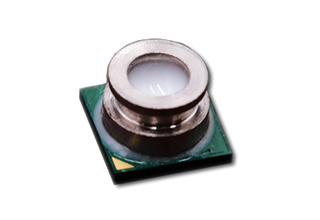
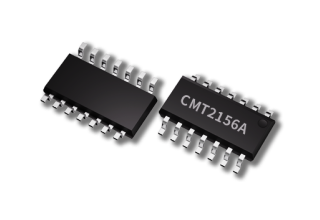


In large-scale IoT applications, IoT terminals are typically widely distributed and numerous, and each data transmission consists mostly of small amounts of periodic status or sensor information.
Furthermore, these terminals are often battery-powered, placing stringent requirements on power consumption and battery life.
Compared to high-bandwidth communication technologies, communication solutions with long-range coverage, low power consumption, and low data rates are better suited for large-scale IoT applications, effectively reducing network construction costs and improving system reliability and deployment flexibility.

Among them, the LoRa module is a mainstream hardware unit for large-scale IoT applications.
Through chirp spread spectrum modulation (CSS) and forward error correction mechanism, it can achieve long-distance, low-data-rate, and high-receiver-sensitivity data transmission capabilities.
Under typical deployment environments and low-power operation conditions, it can also achieve communication coverage of several kilometers to more than ten kilometers. Moreover, it is flexible in deployment and can stably support the long-term stable operation of battery-powered devices.
It is one of the communication solutions widely used in IoT scenarios such as smart cities, smart agriculture, and industrial monitoring at present.
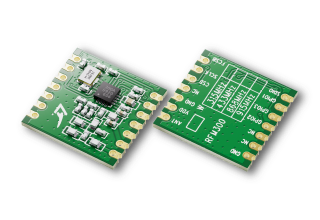
For example, the RFM95 transceiver is a remote communication module independently developed by HOPERF that supports LoRa modulation technology.
Requires only low-cost crystal components and a bill of materials to achieve a receive sensitivity as low as -140dBm.
Combined with its integrated +20dBm power amplifier, the RFM95 also boasts a maximum link budget of 164dB, making it an efficient solution for long-distance, low-data-rate communication in IoT terminals.

It is worth mentioning that, in addition to LoRa modulation, RFM95 is also compatible with multiple modulation methods such as FSK, GFSK, MSK, GMSK, and OOK, and supports industry standard protocols such as WMBus and IEEE 802.15.4g.
It is suitable for multiple fields such as smart meter reading, industrial IoT, and smart home, and has strong cross-industry reusability, meeting different communication needs without changing hardware.

RFM95 module schematic diagram
From a system architecture perspective, the RFM95 employs a typical low-IF (Low-IF) wireless transceiver structure.
In the receive link, the RF signal is first amplified by a low-noise amplifier (LNA) and then converted into differential form, thereby improving the system's second-order linearity and enhancing harmonic suppression capabilities. (The LNA uses a single-ended input structure, which reduces the number of external components and simplifies RF front-end design.)
Subsequently, the signal is down-converted by a mixer to generate in-phase (I) and quadrature (Q) components at the intermediate frequency (IF). Next, a pair of Σ-Δ analog-to-digital converters (ADCs) perform the analog-to-digital conversion; subsequent signal processing and demodulation are all completed in the digital domain.
The chip's internal digital state machine simultaneously controls Automatic Frequency Correction (AFC), Received Signal Strength Indication (RSSI), and Automatic Gain Control (AGC), and integrates top-level sequence controller (TLS) functions for packet management and protocol processing.
In the transmit link, the RFM95 integrates three RF power amplifiers (PAs). Two of these are connected to the RFO_LF and RFO_HF pins, respectively, with a maximum output power of +14 dBm.
These two PAs employ an unregulated structure to improve power efficiency and can be directly connected to the receiver's RF input via a simple passive matching network, thus achieving a single-antenna-port, high-efficiency transmit/receive architecture.
The third PA is connected to the PA_BOOST pin and, through a dedicated matching network, can achieve a maximum output power of +20 dBm, covering all frequency bands supported by the frequency synthesizer.
In terms of frequency synthesis, the RFM95 integrates two local oscillator (LO) frequency synthesizers: one covering the low UHF band (up to 525 MHz) and the other covering the high UHF band (above 860 MHz).
Its phase-locked loop (PLL) is optimized for fast locking time and automatic calibration. In transmit mode, frequency modulation is implemented digitally within the PLL bandwidth, and the PLL also supports bitstream pre-filtering to further improve spectral purity.
Furthermore, the RFM95 integrates an RC oscillator and a 32 MHz crystal oscillator to meet the clock requirements of different operating modes. All RF front-end parameters and digital state machine configurations can be flexibly configured via the SPI interface.
The module also integrates an automatic mode sequencer, which can complete the switching and calibration between different chip operating modes in the shortest possible time, thereby improving system operating efficiency.
Unlike complete LoRaWAN devices, LoRa modules only provide physical layer wireless communication capabilities and are not bound to a fixed network protocol.
Therefore, developers have greater flexibility in system architecture design and protocol implementation. Based on this characteristic, LoRa modules can run the LoRaWAN protocol, as well as build private peer-to-peer communication, private star networks, or custom lightweight communication protocols, thus adapting to diverse networking needs.

Difference between LoRa and LoRaWAN (Image source: LoRa Alliance)
Meanwhile, because the upper-layer communication protocols and network logic are designed independently by the developers, the system has greater controllability in terms of frame format definition, communication rate, channel management, power consumption strategies, and data encryption.
This highly open design approach helps developers flexibly optimize communication strategies according to specific application scenarios, thereby better meeting differentiated functional requirements and special application environments.
Furthermore, because it is not limited by a fixed protocol stack , developers can design sleep, wake-up, and data transmission strategies more flexibly, making power management more controllable and easier to achieve ultra-long standby time and microampere-level low-power operation. This gives LoRa modules a significant advantage in battery-powered devices.
With these advantages, LoRa modules can be widely used in scenarios such as remote control devices, local sensor networks, simple data acquisition systems, long-range wireless communication, and private IoT.
In wireless communication applications with lower system complexity requirements but emphasizing low cost and high reliability, LoRa modules often possess irreplaceable value.

As a wireless transceiver module that supports multiple modulation methods, the RFM95 performs excellently in terms of long-distance communication capabilities, low power consumption, and cost control.
A single hardware platform can be adapted to multiple communication protocols and application scenarios, effectively helping developers achieve lower costs, higher efficiency, and wider application expansion capabilities while ensuring communication performance.

https://www.hoperf.com/service/apply/
If you are interested in HOPERF' LoRa module RFM95 or other wireless communication chips/modules, please scan the QR code above or copy and open the link at the end of the article to apply for samples. We will be happy to serve you!