HOT Search
Hot News

Product recommendation
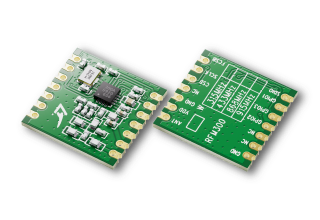
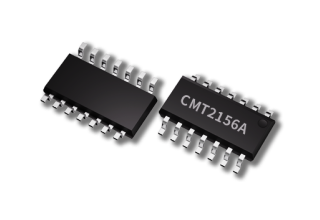


Altitude information, as a core dimension for measuring geographical height, is a crucial physical parameter for operational decisions in fields such as aerospace, low-altitude economy, surveying and exploration, wearable devices, and the Industrial Internet of Things.
Based on atmospheric static equilibrium and the International Standard Atmosphere (ISA) model, barometric altimetry has become the mainstream technology for measuring altitude due to its unique advantages, including offline availability, strong real-time performance, low deployment cost, and wide adaptability.

With the industrial development trend of digitalization, intelligence and low power consumption, barometric altimeter solutions have been evolving from single-point rough estimation to high precision, high reliability, multi-source fusion and miniaturized integration.
Digital barometric sensors are the core sensing devices that accurately convert atmospheric pressure into altitude.
They can provide high-precision barometric pressure measurement and altitude calculation capabilities and are the hardware foundation for driving technological iteration and application scenarios.
Currently, digital barometric pressure sensors are widely used in fields such as aircraft altitude control, building floor identification, environmental weather monitoring and forecasting, and mountain altitude display.
By providing stable and reliable barometric pressure parameters and altitude information, they can provide key data support for altitude perception, motion control, and safety decision-making in various intelligent systems.
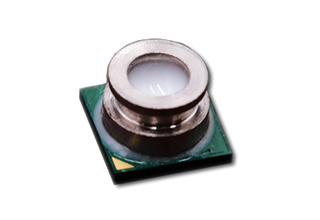
For example, the HP5834 launched by HOPERF is a precision barometric pressure sensor that has been proven effective in real-world applications and is designed for high-performance barometric altimeter measurement.
This device is equipped with a high-resolution 24-bit ADC, uses an I2C-based MEMS pressure sensor, has a wide pressure measurement range of 0 mBar to 2000 mBar, a pressure resolution of up to 0.01 mBar, and the pressure output can be analyzed using Pascal fractions.

Meanwhile, the HP5834 has a temperature measurement range of -40°C to 85°C with a temperature resolution of 0.01°C, providing an accurate temperature compensation basis for altitude calculations.
Within a pressure range of 300 mBa to 1200 mBar and a temperature range of -10°C to 60°C, the HP5834 has a relative pressure accuracy of ±1.5 mBar and an absolute accuracy of ±3.0 mBar.

In addition, developers can configure the oversampling rate (OSR 128~4096) by reading and writing the corresponding registers to flexibly adjust the data response speed and measurement accuracy of HP5834.
The temperature and pressure conversion time of HP5834 can be adjusted in the range of 4.1~131.1 milliseconds to meet the different real-time requirements of different application scenarios.

In terms of power consumption control, the HP5834 also performs exceptionally well. It operates from 1.8 to 3.6V, with a typical measured current I of only 5.3 µA per second (OSR of 256) and a standby current as low as 0.1 µA, making it ideal for applications in battery-powered wearable devices, IoT nodes, and micro-drone systems.
Note: Each HP5834 chip undergoes individual sensitivity and zero-point offset calibration for temperature and pressure measurements before leaving the factory. Calibration values are stored in the on-chip integrated 128-byte non-volatile memory (NVM) and support automatic power-on initialization, significantly simplifying the system design process.
Furthermore, via the I2C digital interface (up to 400kHz), external controllers can easily read the compensated pressure and temperature data, and even directly call the built-in altitude calculation algorithm, thereby reducing the MCU's computational burden and shortening the product development cycle.
Digital barometric pressure sensors are the physical entry point and data source for measuring altitude using atmospheric pressure.
They undertake the entire chain of functions, including barometric pressure signal acquisition, analog-to-digital conversion, temperature compensation, and data output, and directly determine the accuracy, response speed, stability, and power consumption of altitude calculation.
According to the principle of atmospheric static equilibrium, under atmospheric static equilibrium, air pressure and density decrease with increasing altitude. Using this equilibrium relationship, altitude can be estimated through air pressure measurements (applicable to atmospheres that are stationary or in uniform vertical motion).
The International Standard Atmospheric Model (ISA) also proposes that altitude values can be derived from air pressure and temperature data, with the core relationship exhibiting an exponential change.

Relationship between air pressure, density, and temperature and altitude (Image source: Wikipedia)
Engineering experience suggests that in a standard tropospheric environment, a pressure drop of approximately 1 hPa corresponds to a corresponding altitude change of about 8 to 9 meters.
This means that when the pressure resolution is improved to 0.1 hPa, the altitude resolution can reach the meter level; when the pressure resolution is further improved to 0.01 hPa, the theoretical altitude resolution can enter the decimeter range.
Therefore, as long as a digital barometric sensor can acquire pressure and temperature data with high accuracy and low noise, and perform accurate compensation and calculation, a highly reliable barometric altimeter function can be achieved.

For example, in a drone system architecture, digital barometric pressure sensors are typically connected directly to the main control MCU via an I2C serial port.
The altitude data output by these sensors can be fed into the flight control algorithm in real time for calculation.
Based on the altitude data output by the sensor, the system can extract the altitude change rate parameter, accurately identify fault states such as abnormal descent, rapid altitude loss, and unexpected climb, and trigger protection or attitude correction mechanisms.
This high-sensitivity detection capability for transient altitude changes provides reliable redundancy for the stable flight of drones under complex conditions.

https://www.hoperf.cn/service/apply/
If you are interested in HOPERF's HP5834 digital barometer or other sensors, please scan the QR code above or copy and open the link at the end of this article to apply for a sample. We will be happy to serve you!