HOT Search
Hot News

Product recommendation
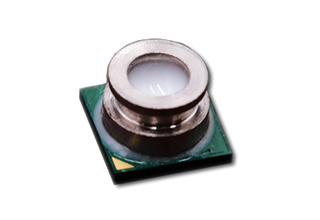
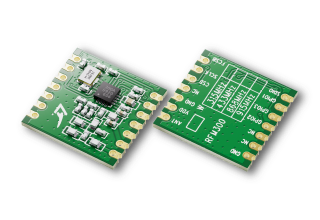
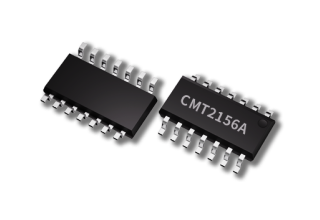


In Sub-1GHz wireless communication systems, modulation and demodulation technology is a crucial link connecting "digital information" and "radio waves." A piece of temperature, humidity, or pressure data from a sensor, or a string of "0"s and "1"s generated by an MCU, cannot be directly and efficiently radiated to a distant end through an antenna.
To allow this digital information to enter the wireless channel, the information needs to be "loaded" onto the radio frequency carrier, a process called modulation. Similarly, the receiving end extracts the original information from the radio frequency signal, a process called demodulation.

From the perspective of communication systems, modulation and demodulation technology determines how wireless links balance indicators such as communication distance, data rate, bandwidth, power consumption, anti-interference capability, and receiver sensitivity. Therefore, modulation and demodulation technology is also one of the core technologies in the design of Sub-1GHz radio frequency communication chips and wireless modules.
According to the laws of antenna physics, the radiation efficiency of an antenna is strongly correlated with its physical length relative to the electrical length of the operating wavelength. However, digital signals typically exhibit low-frequency baseband level transitions (such as ...0 1 0 0...), with relatively long wavelengths.
This results in the electrical length of small antennas on the device being much smaller than the 1/4 wavelength required for resonance, leading to severe impedance mismatch, radiation resistance approaching zero, and energy being confined to the vicinity of the feed line only in the form of near-field induction, failing to form a far-field traveling wave propagating outward.
Therefore, wireless communication systems typically generate a high-frequency, stable sinusoidal carrier: s(t) = Acos(2πf_ct + φ), where: A represents the carrier amplitude, which represents the output power of the radio frequency signal; (f_ct) represents the center frequency of the carrier; and φ represents the initial phase of the carrier—this carrier itself is a constant sine wave, which does not carry any effective service data and only serves as a "carrier" for information transmission.

Schematic diagram of the effects of analog modulation and digital modulation
The binary bitstream generated by sensors and MCUs belongs to low-frequency baseband signals. In wireless communication systems, radio frequency transmitters need to modulate it onto the "carrier" through modulation technology, changing one or more dimensions of the carrier amplitude A, frequency (f_ct), and phase φ of the "carrier" to map digital information onto the time-varying parameters of the radio frequency signal, thus completing the conversion from low-frequency baseband signal to high-frequency wireless radio frequency carrier signal carrying digital information.
From the mathematical expression of sinusoidal carrier wave s(t)=Acos(2πf_ct+φ), we know that there are three independent modulatorable parameters: carrier amplitude A, frequency (f_ct), and phase φ. Based on this, modulation methods can be divided into three basic types: amplitude modulation, frequency modulation, and phase modulation.
Furthermore, based on the properties of the baseband signal, modulation techniques can be categorized into two main types: analog modulation and digital modulation. Analog modulation mainly includes amplitude modulation (AM), frequency modulation (FM), and phase modulation (PM); digital modulation mainly includes amplitude shift keying (ASK), on/off keying (OOK), frequency shift keying (FSK), and phase shift keying (PSK).
These basic modulation methods together form the technical foundation for various complex modulation schemes in Sub-1GHz radio frequency communication.
ASK, short for Amplitude Shift Keying, is a digital modulation technique that transmits digital information by changing the amplitude of a carrier wave. Its basic idea is to use digital signals to control the amplitude of a radio frequency carrier, so that different digital symbols correspond to different carrier amplitudes, while the carrier frequency remains constant and the phase relationship remains stable.
Taking binary ASK (2ASK) as an example, two different carrier amplitudes can be used to represent the digits "0" and "1" respectively. When transmitting the digit "1", the carrier is transmitted at a higher amplitude; when transmitting the digit "0", it is transmitted at a different amplitude. The receiving end can determine which digit symbol is being transmitted by detecting the change in carrier amplitude.
The advantage of ASK lies in its relatively simple implementation principle, the ease of implementation of modulation and demodulation circuits, and the ability to achieve low system cost and power consumption. Therefore, it has certain application value in low-speed, low-cost wireless communication scenarios.
However, since information is directly carried on the carrier amplitude, the signal amplitude is easily affected by wireless channel attenuation, noise, interference, and multipath propagation. Therefore, ASK is quite sensitive to amplitude variations. In complex wireless environments, the system needs to improve communication reliability through techniques such as appropriate receive thresholds, automatic gain control, synchronization, and coding.
OOK, short for On-Off Keying, is a special type of ASK modulation. Instead of using two different non-zero amplitudes, it sets one of the amplitudes to zero, using the presence or absence of a carrier wave to represent different digital states.
The simplest binary OOK can be represented as: 1→ON, 0→OFF. That is, when the number "1" is sent, the radio frequency carrier is transmitted normally; when the number "0" is sent, the carrier is turned off or the carrier amplitude is reduced to zero.
The biggest advantages of OOK are its simplicity, low cost, and low power consumption, making it suitable for wireless applications that are sensitive to hardware complexity and cost, and have small data volumes and low transmission rate requirements, such as simple remote control, wireless switches, and low-power sensors.
However, OOK is also quite sensitive to noise, interference, and variations in the amplitude of the received signal. Therefore, in complex wireless environments, it is necessary to combine reception thresholds, synchronization, encoding, and protocol mechanisms in a comprehensive design to improve communication reliability.
FSK, short for Frequency Shift Keying, is a digital modulation technique that transmits digital information by changing the carrier frequency. Its basic idea is to use digital signals to control the frequency of a radio frequency carrier, so that different digital symbols correspond to different carrier frequencies. The amplitude of the carrier usually remains constant, while the phase changes continuously or accordingly depending on the specific FSK modulation method.
Taking binary FSK (2FSK) as an example, two different carrier frequencies can be used to represent the digits "0" and "1" respectively. When transmitting the digit "0", the carrier operates at frequency f0; when transmitting the digit "1", the carrier switches to frequency f1. The receiving end can determine which digit symbol is being transmitted by detecting the change in carrier frequency.
The advantage of FSK lies in its ability to maintain a relatively constant signal amplitude and adapt well to amplitude variations and nonlinear distortion. Therefore, it can be well adapted to high-efficiency power amplifiers and has high application value in low-power, long-distance wireless communication scenarios.
Meanwhile, FSK modulation and demodulation principles are relatively mature, and its engineering implementation is relatively stable, making it widely used in Sub-1GHz wireless communication.
However, the frequency offset, symbol rate, and filtering parameters of FSK directly affect signal bandwidth and spectrum occupancy. Therefore, in practical applications, a comprehensive design is needed, taking into account factors such as communication rate, channel bandwidth, receiver sensitivity, and anti-interference capability.
GFSK, short for Gaussian Frequency Shift Keying, is a digital modulation technique that introduces Gaussian filtering into FSK modulation. Its basic idea is that before the digital signal enters the FSK modulator, the baseband signal is smoothed by a Gaussian low-pass filter. The processed signal is then used to control the carrier frequency, allowing digital information to be transmitted through changes in the carrier frequency.
Compared to traditional FSK, GFSK does not change the fundamental principle of FSK transmitting information through frequency changes. Instead, it performs Gaussian filtering on the digital baseband signal before modulation, thereby slowing down the frequency change process, reducing high-frequency components and spectral sidelobes generated during frequency switching, and giving the modulated signal more compact spectral characteristics.
The advantage of GFSK is that it can effectively improve spectrum utilization and reduce adjacent channel interference while maintaining the constant or near-constant envelope characteristics of FSK. Therefore, it is suitable for wireless communication scenarios with certain requirements for spectrum occupancy, power consumption and communication reliability.
PSK, short for Phase Shift Keying, is a digital modulation technique that transmits digital information by changing the phase of a carrier wave. Its basic idea is to use digital signals to control the phase of a radio frequency carrier, so that different digital symbols correspond to different carrier phases, while the amplitude and frequency of the carrier wave typically remain constant.
Taking binary PSK (BPSK) as an example, two carrier phases differing by 180° can be used to represent the digits "0" and "1". When transmitting the digit "0", the carrier uses a 0° phase; when transmitting the digit "1", the carrier uses a 180° phase. The receiving end can determine which digit symbol is being transmitted by detecting the change in carrier phase.
The advantage of PSK lies in its ability to transmit digital information while maintaining a relatively constant carrier amplitude. It exhibits good noise immunity and high spectrum efficiency, making it suitable for wireless communication scenarios with certain requirements for reliability and spectral efficiency.
Depending on the number of phase states corresponding to a symbol, PSK can be further divided into different forms such as BPSK, QPSK, and 8PSK, and is widely used in practical digital communication systems.
MSK, short for Minimum Shift Keying, is a special type of Continuous Phase Frequency Shift Keying (CPFSK) digital modulation technique. Its basic idea is to transmit digital information by changing the carrier frequency, setting the frequency offset to a minimum value that satisfies the orthogonality condition, while ensuring that the carrier phase remains continuous during symbol switching, thereby reducing phase abrupt changes and spectral spread caused by frequency switching.
The advantages of MSK (Multi-Session Kinematics) lie in its constant envelope and continuous phase characteristics, making it well-suited for high-efficiency power amplifiers. It also boasts a compact spectral profile and good noise immunity, making it suitable for wireless communication scenarios with specific requirements for power consumption, spectrum utilization, and communication reliability.
In practical wireless communication systems, MSK is also a crucial foundation for continuous-phase FSK (Frequency-Sensitive Kinematics) technology. However, MSK also places certain demands on frequency offset, clock synchronization, and receiver demodulation performance. Therefore, in practical applications, it requires comprehensive design considering parameters such as data rate, channel bandwidth, frequency offset, and receiver sensitivity.
In the Sub-1GHz domain, there is another very important modulation technique—CSS, Chirp Spread Spectrum. The core physical layer technology used by LoRa is based on the Chirp Spread Spectrum spread spectrum modulation scheme.
Unlike traditional FSK, which switches between several discrete frequencies, the instantaneous frequency of the Chirp signal changes continuously over time, as shown in the figure below:

In other words, within a symbol duration, the signal frequency will continuously sweep according to a certain pattern. By extending the signal bandwidth and utilizing spreading gain, CSS enables the system to achieve reliable communication under conditions of low received signal power, making it very suitable for low-data-rate, long-distance, and low-power IoT scenarios.
After modulation is completed at the transmitting end, the radio frequency signal passes through the radio frequency power amplifier, transmitting antenna, wireless channel, and receiving antenna before finally reaching the receiving end.
However, what the receiver actually receives is not the clean "0" and "1" in the ideal state , but a radio frequency signal superimposed with various noises and interferences . During the propagation process, the signal is affected by a variety of factors such as path loss, co-channel interference, adjacent channel interference, multipath effect, frequency offset, clock deviation, and fading.
The receiver typically first selects, amplifies, and filters the target signal through the radio frequency front-end to extract the signal to be received from the complex wireless environment, and then it enters the baseband processing and demodulation stage.
After demodulation, the receiver obtains the recovered digital symbols or baseband data, which then needs to undergo synchronization, data recovery, frame parsing, verification, and other processing before finally being handed over to the upper-layer protocol stack for processing.
It is worth noting that there is no absolute " superiority" or "inferiority " among different modulation methods . Modulation technology is essentially a trade-off between different system indicators .
In the actual design of Sub-1GHz wireless products, developers often need to make a comprehensive selection based on factors such as communication distance, data rate, receiver sensitivity, transmit power, channel bandwidth, system power consumption, anti-interference capability, network capacity, and the radio regulations of the region.

HOPERF founded in 2004, primarily engages in the research, development, production, and sales of wireless communication RF chips and modules, as well as high-precision sensor chips, based on Sub-1GHz wireless communication technology. It is a chip design company with full-chain self-developed capabilities for Sub-1GHz wireless communication RF chips. HOPERF focuses on the research and development and breakthroughs in IoT wireless communication transmission and acquisition technologies.
After years of technological accumulation, it has developed into an IoT system-level service provider integrating RF chip design, firmware and protocol design, application development, and testing. Its independently developed Sub-1GHz wireless communication RF chips are crucial foundational communication chips in the IoT field.
If you are interested in HOPERF's independently developed Sub-1GHz RF chips, please scan the QR code above or copy and open the link https://www.hoperf.cn/service/apply/ to apply for samples. We will be happy to serve you!