HOT Search
Hot News

Product recommendation
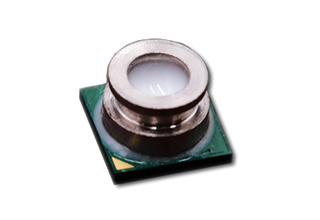
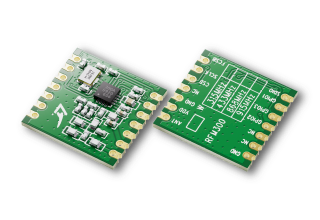
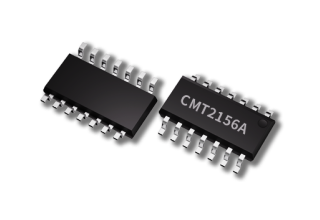


As the stage lights dim, the first melody, like a gentle breeze, brushes past your tense heartstrings. You can finally leave behind unread messages on your phone, to-do lists on your computer, and all the anxiety, restlessness, and unease brought on by the outside world, surrendering them all to this long-awaited concert—no explanations, no reasons needed, just wave your glow stick to the beat, and in the sea of sound and light surrounded by millions of people, gradually forget about "efficiency," "results," and "KPIs," allowing your soul to generate uplifting power in the melodious singing.

Okay, concerts are great for stress relief, but have you ever wondered how that sea of glow sticks, which dimmed and brightened for us, carrying the power of "emotional manipulation," could rise and fall with the music like the tides, spreading out in ripples, and then suddenly scatter into countless stardust at the end of the chorus, completing a grand collective disillusionment? Beneath this romantic facade, is it the silent manipulation of wireless signals, or some more mysterious synchronization mechanism?
As shown in the figure below, in the concert venue control glow stick solution, the stage central control is the scheduling core, mainly responsible for generating the wireless command signals required for the entire performance, covering complex control parameters such as color gamut space mapping, PWM dimming depth, dynamic flashing rhythm, and global scene snapshot switching.

As an execution node in the network, glow sticks mainly undertake tasks such as wireless signal reception, protocol parsing, status synchronization, and light effect presentation. These glow sticks typically integrate functional modules such as a main control MCU, a Sub-1GHz radio frequency receiver chip, a high-efficiency power management unit, RGB LED beads, and an antenna.
When the Sub-1GHz RF receiver chip receives the control command issued by the stage control unit via the wireless link, it will immediately demodulate it and transmit the demodulated control command to the main control MCU through the digital interface.
Then, the main control MCU will verify and parse the demodulated control command and update the PWM duty cycle in real time according to the parsed timing parameters, color coordinates and brightness level, so as to accurately drive the LED beads to present the predetermined light color.
For example, the RGB color data sent by the stage control center is mapped to the color space and then converted by the MCU into corresponding LED driving parameters.
The current ratio of the red, green and blue channels is then adjusted by the high-frequency PWM signal to achieve complex lighting effects such as continuous color gamut changes, gradations, breathing, and strobe.
It is worth mentioning that the large-scale implementation of any wireless control solution ultimately requires a series of mature and reliable radio frequency chips as a communication bridge between devices.
For example, the CMT2210LB is an ultra-low power, high-performance, and low-cost OOK receiver suitable for various 240 to 480MHz wireless applications. The CMT2210LB boasts a high receiver sensitivity of -113 dBm (@1 kbps, 0.1% BER), maintaining stable wireless signal reception performance in complex environments.
This helps glow sticks accurately receive control information such as color, brightness, flashing rhythm, and scene transitions from the stage control center.
In addition, the CMT2210LB integrates a complete RF receiving link, including a low-IF receiving architecture, VCO, baseband filtering, and digital demodulation module. The chip can complete wireless signal reception and data recovery without complex external RF control circuits.
Meanwhile, the demodulated control data from the chip can be directly output to the glow stick's main control MCU via the DOUT pin, where the MCU performs protocol parsing and light effect control logic processing.
This highly integrated design not only reduces the number of peripheral components, lowers the terminal PCB area and hardware cost, but also improves the consistency of RF performance during mass production.
In terms of power consumption, the CMT2210LB operates at a current of only 3.8 mA in continuous receiving mode, which can effectively meet the needs of portable glow sticks for long-term operation.

Sub-1GHz Wireless RF Transceiver Solution (Single Transmit - Single Receive Series)
In terms of wireless link quality, the CMT2210LB can also be combined with the CMT211X series Sub-1GHz RF transmitter chip to build a highly flexible, low-cost, and highly reliable wireless transceiver link. Both the CMT211X series transmitter chip and the CMT2210LB receiver chip belong to the CMOSTEK NextGenRF product series.
They have excellent matching capabilities in terms of operating frequency band, data rate, and modulation method, forming a complete unidirectional broadcast wireless control solution to meet the application requirements of "centralized transmission and batch reception at terminals" in concert glow stick systems.

https://www.hoperf.com/service/apply/
If you are interested in HOPERF' Sub-1GHz RF chips, please scan the QR code above or copy and open the link at the end of this article to apply for samples. We will be happy to serve you!