HOT Search
Hot News

Product recommendation


As IoT wireless communication solutions accelerate their large-scale development , more and more IoT terminals are entering application environments characterized by unattended operation, long-term operation , and distributed deployment .
From urban infrastructure monitoring to industrial equipment status data collection, and then to agricultural environmental sensing and asset management, massive numbers of IoT terminals not only need to work for extended periods without stable power supply and wired network coverage , but also need to reliably transmit various types of data back to the network hub to support digital scheduling and intelligent decision-making across the entire domain.

In various practical applications such as wireless data collection, building security, and agricultural monitoring, short-range wireless communication solutions are often limited by coverage range , while cellular network communication solutions are highly dependent on the infrastructure provided by operators. LoRa solutions can effectively address these shortcomings.
They can provide wide-area coverage capabilities of kilometers or even tens of kilometers, and also have the advantages of low power consumption, flexible self-organizing networks, and independent network deployment. It is one of the important wireless communication technologies in the LPWAN field.
As is well known, the core value of the LoRa solution does not lie in pursuing higher data throughput, but in significantly increasing the communication distance of IoT terminals under limited bandwidth and power conditions .
Compared with traditional narrowband modulation such as OOK, FSK, and MSK , LoRa mainly encodes data through a linearly varying "chirped signal," which makes the signal exhibit extended characteristics in the frequency domain, thereby obtaining significant spread spectrum processing gain, achieving reliable demodulation at low or even negative signal-to-noise ratios, and greatly improving anti-interference, anti-multipath, and anti-blocking capabilities.

Schematic diagram of the time-domain curve and frequency variation of the CSS modulated signal
Based on the spread spectrum processing gain effect, IoT terminals using the LoRa solution often have higher receiving sensitivity and can withstand greater path loss . Even when faced with building obstruction, environmental noise, and wireless interference, IoT terminals using the LoRa solution can maintain high communication reliability , making them particularly suitable for IoT application scenarios with requirements of " wide coverage, small data transmission, and long-term online operation " .
In addition, LoRa allows developers to flexibly set communication parameters such as spreading factor, communication bandwidth, and coding rate .

Typically, different spreading factors and bandwidth configurations can meet a variety of application requirements . For example, in long-distance scenarios , developers can use a higher spreading factor and a lower communication bandwidth to improve the communication distance of IoT terminals ; while in applications with high data real-time requirements, developers can improve communication efficiency by reducing the spreading factor and increasing the bandwidth .
The coding rate can improve the signal's anti-interference and error correction capabilities in complex channel environments . The lower the coding rate, the stronger the error correction capability and the higher the link reliability; the higher the coding rate, the higher the effective data transmission efficiency.
In terms of power consumption, LoRa can improve the battery life of IoT terminals through various mechanisms such as CAD channel activity detection, low-power sleep mode, receive duty cycle control, adaptive rate adjustment, and efficient RF operating modes.
Among these, CAD can complete channel detection in a short time, avoiding the device from being in a receiving state for a long time; at the same time, LoRa's high link budget can effectively reduce the number of repeated communication by the terminal, enabling the device to operate for a long time with lower average power consumption, which is especially suitable for battery-powered and unattended deployment scenarios.
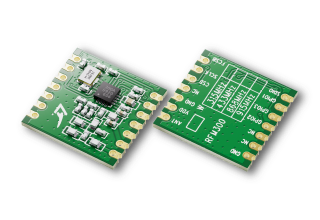
It is worth mentioning that any communication solution ultimately needs to rely on high-performance hardware to be implemented , and the RFM91SCW is a long-range LoRa transceiver module for the Sub-GHz band .
The RFM91SCW adopts a highly integrated RF architecture and supports multiple modulation methods such as LoRa, FSK, and GFSK, which can meet the comprehensive requirements of different IoT scenarios for distance, power consumption, and communication reliability.

In terms of communication performance , developers can flexibly set the bandwidth range (7.8kHz~500kHz) and spreading factor ( SF5 ~ SF12 ) of the RFM91SCW to adjust and adapt to the application requirements of specific scenarios . At the same time, the RFM91SCW can also provide a maximum transmit power of +22dBm and supports adjustable output power.
In wireless communication networks with multiple long-distance nodes , the RFM91SCW's high transmit power combined with high receive sensitivity can effectively improve the link budget of the entire communication system , enhance signal coverage and communication reliability, and enable IoT terminals to achieve longer-distance and more stable data transmission in complex environments.
addition to communication performance , power consumption control is another important advantage of the RFM91SCW . The RFM91SCW supports a receive current of 8.8mA @BW=125KHz and a sleep current of 1uA, which can help developers build wireless communication products with longer lifespan and lower maintenance costs , while meeting the long-term operation requirements of battery-powered terminals .

https://www.hoperf.cn/service/apply/
If you are interested in HOPERF's independently developed high-performance LoRa module RFM91SCW or other LoRa/LoRaWAN modules, please scan the QR code above or copy and open the link at the end of the article to apply for a sample. We will be happy to serve you.