HOT Search
Hot News

Product recommendation


In the smart home industry , it has become commonplace for smart devices based on different communication protocols (Zigbee, BLE, Wi-Fi, Z-Wave, Thread, etc.) to coexist in the same environment .
While these protocols each have their advantages, differences in underlying communication architecture, network topology, and data models have long created interoperability barriers between devices using different protocols.
This has led to problems such as ecosystem fragmentation, system silos, and high operational complexity for users in actual deployments. This fragmented development path not only restricts user experience but also limits the large-scale deployment of smart homes .

Against this backdrop , the Matter protocol emerged. As a unified application layer standard jointly promoted by the mainstream industry ecosystem, Matter achieves cross-protocol and cross-brand interoperability through abstract device capability models and unified data semantics , fundamentally breaking down the ecological barriers between smart home systems.
The core value of the Matter protocol lies not in replacing the underlying communication protocol, but in building a standardized application layer framework on top of it, enabling different communication technologies to work collaboratively within the same logical system, thereby promoting the " coexistence " of multi-protocol devices .
From a technical architecture perspective, Matter communicates over IP networks, possessing a certain degree of cross-network compatibility. Furthermore, by using unified data semantics to describe device functions, it ensures consistent identification and control of devices across different ecosystem platforms.
This framework design helps device manufacturers avoid repeated adaptations for different ecosystem platforms during product development, achieving the convenience of " develop once, deploy on multiple platforms , " significantly reducing R&D and maintenance costs, and enhancing product ecosystem compatibility .

The Matter Network Stack (Image source: CSA Alliance website)
In practical applications , traditional smart home devices typically rely on the cloud for command processing and logic operations. Once the network is interrupted, the devices immediately lose responsiveness, severely impacting the user experience .
In contrast, the Matter protocol emphasizes a local-first communication mechanism, with devices primarily interacting directly via a local area network, significantly reducing the uncertainty caused by network interruptions/latencies.
For example, when a consumer opens the door and triggers " home mode , " the door lock status and lighting system can achieve millisecond-level synchronization, maintaining stable operation even in offline environments.
Meanwhile, the Matter protocol's localized processing mechanism also offers advantages in data security and privacy protection . For example, taking smart lighting and sensing devices that support the Matter protocol as an example, the function of "lights on when people are present and off when they leave" can be completed entirely locally in a closed loop, which can both meet the needs of intelligent systems and avoid the risk of data leakage.
Furthermore, the Matter protocol 's application value in energy management is gradually becoming apparent. For example, energy management functions enable high-power devices to report their energy usage or power generation in real time and track it over time . The system can then use this data to dynamically analyze and optimize household energy use, achieving more refined energy management.
At present, given the industry's high barriers to entry in Matter equipment development, large investment in self-development, and long production cycles, adopting modular solutions has become one of the mainstream paths for many equipment manufacturers to build a Matter ecosystem and efficiently promote the launch of Matter equipment.
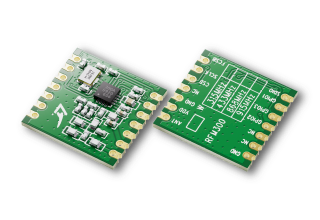
HOPERF' HM-MT2401 is a Matter over Thread wireless communication module based on the 2.4GHz band. It includes a high-performance, highly integrated RF processing chip, EFR32MG24, with an embedded low-power 32-bit ARM® Cortex®-M33 core, 1536kB Flash, 256kB RAM, and abundant peripheral resources. It features an integrated PCB antenna and an external antenna mount, supporting Matter,
Thread, and BLE wireless communication technologies. It can be used to develop Matter over Thread terminal devices, easily upgrading existing wireless devices to smart home devices that meet the Matter standard.

The HM-MT7201 is another Matter over Wi-Fi wireless communication module based on the 2.4 GHz band. It is a highly integrated single-chip Wi-Fi 802.11b/g/n and Bluetooth Low Energy (BLE) solution designed for compact applications.
Internally, it integrates a powerful 32-bit MCU and a comprehensive set of peripheral interfaces , offering high integration and low power consumption in a tiny package, making it suitable for smart lighting, smart homes, indoor positioning, and other complex IoT applications.

For developers, they only need to design a simple interface to connect the above modules to an external host controller via a serial port to upgrade existing smart home devices to Matter devices that meet the Matter standard specifications. This also allows them to effectively separate Matter firmware functions from product functions without having to refactor product logic, which can greatly improve development efficiency (by up to 70%).

https://www.hoperf.cn/service/apply/
If you are interested in HOPERF's independently developed Matter modules, please scan the QR code above or copy and open the link at the end of the article to apply for samples. We will be happy to serve you!