HOT Search
Hot News

Product recommendation


In the smart home sector , the industry's development has long been constrained not by " connectivity , " but by the predicament of "ecosystem fragmentation . "
From BLE and Wi-Fi to Thread, wireless communication technologies have matured and can basically meet consumers' diverse needs in terms of transmission speed, transmission distance, privacy, security, and stability.
Essentially, they have effectively solved the problem of "how devices connect to the network."

However, as the number of devices connected to the network increases and smart homes move from single- product intelligence to whole-house intelligence , new problems arise.
Different brands and manufacturers have different data expression methods, control logic, security strategies, and even network architectures , making it difficult to form a unified interaction semantics and collaborative mechanism .
This leads to a linear increase in the complexity of interoperability between devices, eventually evolving into a smart home system with severe "ecosystem fragmentation" and difficulty in maintenance.
Against this backdrop, the value of the Matter protocol becomes apparent— it is not simply a "new protocol" superimposed on existing technological systems , but rather a unified standard for smart homes built upon the application layer .
The Matter protocol achieves communication based on the TCP/UDP transport layer and the IPv6 network layer, and is compatible with various underlying network technologies such as Wi-Fi, Thread, and Ethernet.
As shown in the diagram below , Matter uses a layered architecture to separate different responsibilities and provides good encapsulation between different protocol stacks, so that application logic, data definition, interaction behavior, message encoding, security processing and network transmission are decoupled from each other and work together.

A schematic diagram of the interoperability process between devices under the Matter protocol (layered architecture diagram source: CSA)
In this layered architecture, the Application layer corresponds to the high-level business logic of the device, such as the functions of turning light bulbs on/off and controlling colors in a lighting application; the Data Model layer defines the data model and actions of the application , which will use this data to interoperate with the device; the Interaction Model layer defines a series of interactions between the client device and the server device, which act on the elements defined in the Data Model layer.
These features allow for a consistent way of representing various devices within a system. This means that lights, switches, or sensors from different manufacturers are no longer isolated from each other in the system, but interact according to the same semantic model, fundamentally eliminating the "ecosystem fragmentation" problem that has long plagued the industry.
a user constructs an action using the Interaction Model, the action is serialized into a specified compressed binary format for encoding for network transmission . This process is handled in the Action Framing layer.
After the action frame is encoded, it is processed by the Security Layer : the message is encrypted and an authentication code is attached .
These processes ensure the confidentiality and authenticity of the data between the message sender and receiver.
When interactions are serialized, encrypted, and signed, the Message Layer constructs the payload format using required and optional header fields, which specify message attributes and logical routing information . After the payload is constructed by the Message Layer, it uses an IP-based data transmission protocol (TCP or Matter's MRP protocol) .
Once the receiving device receives the data, the data stream moves up the protocol stack, meaning each layer reverses the operations performed by the sender on the data, ultimately delivering the message to the application.
In addition, at the security level, the Matter protocol elevates security design to a mandatory requirement. Matter communication requires end-to-end encryption based on DTLS/TLS and implements device authentication and secure communication through the PASE/CASE session establishment process .
In terms of network architecture, Matter also demonstrates high flexibility. Matter devices can operate in Wi-Fi networks, or they can achieve direct interoperability between Thread and Wi-Fi devices at the IPv6 network layer through Thread border routers, thereby building a unified hybrid network of low-power and high-bandwidth devices.
However, no matter how advanced the protocol standard is, it will be difficult to truly change the industry landscape if there is no engineering implementation path. The key to the Matter protocol’s real-scale application is whether it can be quickly integrated into actual products.
In this process, modular solutions have become a key bridge connecting “standards” and “products”.
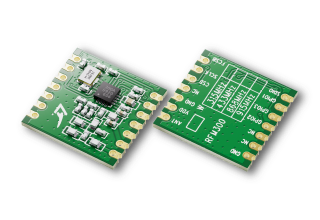
For example, HOPERF' HM-MT2401 is a Matter over Thread wireless communication module based on the 2.4GHz band, with a design focus on balancing low power consumption and network stability.
By integrating Thread capabilities and providing a PCB antenna and external antenna mount, the HM-MT2401 can optimize power consumption while ensuring communication distance, making it suitable for typical smart home terminals such as lamps, switches, door locks, and various sensors.

The HM-MT7201 is another Matter over Wi-Fi wireless communication module suitable for devices with high data throughput requirements. It helps devices directly access the Matter ecosystem while maintaining data transmission performance.
These modules encapsulate complex protocol stacks, security mechanisms, and network management capabilities at the underlying layer, eliminating the need for device manufacturers to implement the Matter protocol from scratch. This significantly lowers the development threshold and accelerates time-to-market.

In practical applications, thanks to the Matter protocol's multi-Fabric mechanism, smart home devices that integrate Matter modules can simultaneously access mainstream platforms such as Apple Home and Amazon Alexa without having to develop different versions of the software system.
This capability fundamentally changes the past product strategy of "binding to a single ecosystem" and enables smart home devices to truly have cross-platform interoperability.

https://www.hoperf.com/service/apply/
If you are interested in HOPERF's independently developed Matter modules, please scan the QR code above or copy and open the link at the end of the article to apply for samples. We will be happy to serve you!