HOT Search
Hot News

Product recommendation
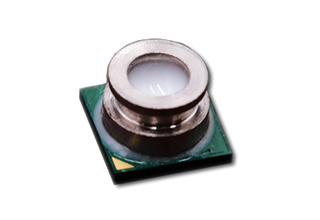
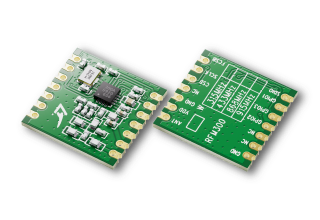
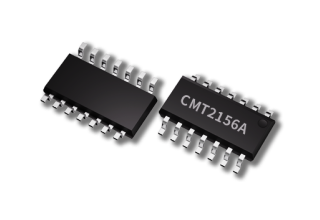


In the era of the Internet of Everything, industries such as industrial meter reading , industrial monitoring, and home security are accelerating their development towards wireless transmission and digital management.
As one of the hardware foundations for these industries to build LPWAN (Low Power Wide Area Network), IoT chips are also evolving from meeting basic connectivity needs to possessing characteristics such as "high frequency utilization, ubiquitous connectivity, flexible adaptation, and stability and reliability".

Among them, the Sub-GHz wireless transceiver microcontroller, as a core communication unit that enables rapid networking, reduces device power consumption and simplifies system design, integrates the Sub-GHz radio frequency transceiver with the microcontroller.
This not only improves communication stability but also effectively reduces the cost of IoT terminal deployment and long-term operation and maintenance.
It is one of the important hardware units for achieving accurate and stable wireless interaction in various low-power wide-area communication application scenarios.
Sub-GHz wireless transceiver microcontrollers are single-chip communication solutions that are optimized at the system level for IoT scenarios.
By completing core functions such as RF signal transmission and reception, low-power communication control, wireless protocol operation and logic processing within a single chip, developers can significantly simplify the design of IoT terminals by reducing the number of peripheral components, shrinking product size (reducing PCB area and BOM cost), and improving product reliability and usability.

As shown in the diagram above, in the fields of wireless sensor nodes and industrial monitoring, Sub-GHz wireless transceiver microcontrollers can form battery-powered low-power wireless sensor nodes by directly connecting to sensors via I2C.
Leveraging the long-range, strong penetration, and low-power characteristics of the Sub-GHz band, and its flexibility in supporting custom chip communication protocol stacks, developers can freely choose networking methods such as star and mesh topologies, and achieve stable access and rapid deployment of large-scale wireless sensor nodes even in complex electromagnetic interference environments .
In addition, developers can configure RF registers through the SPI interface to flexibly adjust the modulation method, output power, and operating mode of the Sub-GHz RF transceiver chip and other communication parameters and functions.
They can also directly develop application logic based on the existing framework of the Sub-GHz wireless transceiver microcontroller without having to delve into the underlying RF driver and protocol parsing.
They only need to focus on upper-layer business functions such as sensor data acquisition, command interaction, and networking strategies, which can significantly shorten the cycle from prototype to mass production of IoT products.
In practical applications, the performance indicators and system-level integration capabilities of Sub-GHz wireless transceiver microcontrollers often directly affect the communication quality of wireless RF links, the power consumption of terminal nodes, and the long-term operational stability of the overall system.
Therefore, selecting a Sub-GHz wireless transceiver microcontroller that achieves a good overall balance between RF performance, power consumption control, and logic processing capabilities has become an important consideration in engineering design .
For example, the CMT2392F512 is a high-performance Sub-GHz wireless transceiver microcontroller independently developed by HOPERF.
It integrates a 32-bit ARM Cortex™-M4F core and an ultra-low-power Sub-GHz RF transceiver, supports OOK, 2(G)FSK, 4(G)FSK and other modulation methods, can operate in the 113~960 MHz frequency band, and has a transmit power of +20dBm and a sensitivity of -122dBm.
It supports multiple data packet formats and encoding and decoding methods, which makes it flexible enough to meet the needs of various applications.

In addition, the CMT2392F512 also supports a variety of features such as a 128-byte Tx/Rx FIFO, rich GPIO and interrupt configuration, Duty-Cycle operating mode, channel listening, high-precision RSSI, low voltage detection, power-on reset, low-frequency clock output, fast frequency hopping and squelch output, which can empower developers to design applications more flexibly.
In terms of operating power consumption, the CMT2392F512 is based on a multi-mode power control architecture, which can achieve energy efficiency optimization under all operating conditions.
In deep sleep mode, the RF current consumption can be as low as 400nA; in receive mode, the RF current consumption is 9.4mA@433MHz 2FS KDR=10kbps (DC-DC enabled); in transmit mode, the RF current consumption is 10mA@433MHz -10dBm (the transmit current increases with the transmit power consumption).
Meanwhile, the CMT2392F512 can also be combined with the Duty-Cycle operating mode to significantly reduce the average power consumption of battery-powered IoT nodes and improve product battery life.
In terms of communication performance, the CMT2392F512 supports configuring the RF transmit power from -10dBm to +20dBm in 1dB steps, which can flexibly balance RF power consumption and communication distance.
At the same time, the CMT2392F512 can also be combined with automatic gain control (AGC), high-precision RSSI and PJD phase detection functions to greatly enhance the chip's reception stability in complex environments and meet the requirements of large-scale wireless sensing and industrial monitoring for reliable communication.
In terms of product design, the CMT2392F512 integrates RF transceiver, protocol processing, and application control functions into a single chip, and provides abundant FIFOs, GPIOs, and various communication interfaces.
This allows developers to quickly complete product development without the need for external MCUs or RF chips.
This highly integrated single-chip solution not only significantly simplifies RF debugging and system integration processes but also helps improve product reliability and accelerates the deployment of products at scale.

https://www.hoperf.com/service/apply/
If you are interested in HOPERF's independently developed Sub-GHz wireless transceiver microcontroller CMT2392F512 and other Sub-GHz RF chips/modules (Sub-GHz transmit/receive/transceiver chips, Sub-GHz SoC transmit/receive/transceiver chips, Sub-GHz micro-energy harvesting transmit chips), please scan the QR code above or copy and open the link at the end of the article to apply for samples. We will be happy to serve you!