HOT Search
Hot News

Product recommendation


To alleviate the imbalance between water supply and demand, reduce production and operating costs, and protect the ecological environment, all sectors of society require a more intelligent, digital, and modern approach to water resource management to address challenges related to inefficiency and sustainability.
Whether it's urban water supply networks, agricultural irrigation systems, or industrial water use and water environment management, the processes of water acquisition, transportation, use, and recycling need to achieve greater transparency and controllability.

Among them, LoRaWAN, as an IoT star networking communication technology with long transmission distance, low power consumption and multi-node access capability, can not only build a long-term, stable and efficient water affairs sensing network in various complex terrains and high interference environments by adopting the CSS spread spectrum modulation mechanism, but also flexibly configure communication parameters such as channel bandwidth (BW), spreading factor (SF), coding rate (CR) and operating frequency band. It is an excellent solution to improve the communication quality of water resources monitoring terminals.
In urban water supply and pipeline management scenarios, water waste often occurs in transmission processes, metering errors, and maintenance delays.
However, by deploying pressure, flow, water level, and water quality sensors with integrated LoRaWAN modules at valve wells and key nodes of the pipeline network, and equipping a LoRa gateway at the regional center, a LoRaWAN network can be built to periodically/24/7 monitor the pipeline network status.
After the relevant data from the pipeline network is stably transmitted back to the water management platform via the LoRaWAN network, it can be used to analyze characteristics such as abnormal pressure, sudden changes in flow and water quality, thereby quickly locating potential leak points, shortening fault response time, reducing ineffective leakage rate, and promoting the transformation of the water supply system from post-disaster repair to proactive early warning and precise scheduling.
In agricultural irrigation scenarios, traditional irrigation methods often rely on past production experience to guide fertilization and irrigation, making it difficult to take into account the actual water requirements of crop growth and environmental changes.
However, by deploying soil moisture, temperature, water level and flow sensors with integrated LoRaWAN modules in farmland, orchards and irrigation pipelines, and equipping a LoRa gateway at the center of the area, a LoRaWAN network can be built to monitor the soil moisture status in real time.
After managers analyze relevant data in conjunction with specific weather conditions through the back-end management system, they can automatically control irrigation equipment, enabling precise on-demand water supply operations. This significantly reduces water waste such as over-irrigation and pipe leaks while ensuring healthy crop growth.
In the intelligent water resource network management system, the LoRaWAN communication system serves as the core hub connecting front-end sensing devices and back-end operation and maintenance management systems.
Its performance directly determines the coverage, data integrity, and system operation and maintenance costs of the monitoring network.
A high-performance LoRaWAN module can not only provide stable long-distance communication capabilities but also meet the long-term operational needs of LoRaWAN terminal devices in terms of power consumption control, environmental adaptability, and system integration.
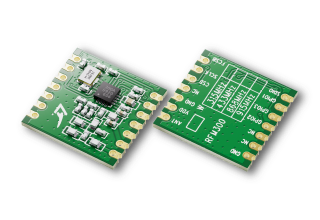
For example, HOPERF's independently developed RFM6601 is a high-performance LoRaWAN module that supports LoRaWAN node features and integrates a general-purpose MCU, RF transceiver, modem, and peripheral devices .
It adopts an advanced mixed-signal design and has passed FCC /CE/IC certification . It is a wireless communication solution that combines core advantages such as ultra-low power consumption, long-distance communication, high sensitivity, strong anti-interference ability, and high integration, which can help water managers efficiently build LPWAN networks.

Based on CSS spread spectrum modulation technology , the RFM6601 possesses inherent anti-multipath interference and penetration capabilities, enabling stable and accurate transmission of digital signals even in low signal-to-noise ratio environments.
Furthermore, the RFM6601 offers a rich set of peripheral functions, including multiple general-purpose GPIOs, a 32.768 kHz external crystal oscillator, channel monitoring, high-precision RSSI measurement , and a 12-bit high-speed ADC and DAC.

In terms of transmission performance, the RFM6601 is equipped with a complete LoRaWAN protocol stack, enabling long-distance communication over distances of several kilometers or even longer .
In terms of battery life, the RFM6601 has a transmit current of only 108mA @+22dBm (3.3V) at 433.92MHz, a receive current of only 10mA @433.92MHz, and a sleep current of only 1.3uA. In Class A mode, it does not require wake-up listening (Class A devices automatically open two short receive windows once the uplink transmission is completed), and the device's battery life can cover multiple seasons or even years.

LoRaWAN Device: Class A
In addition, HOPERF also provides supporting development and demonstration tools (LoRa Configurator) to help developers quickly test and verify the communication parameters (including operating mode Class A/B/C, network access mode, data rate/spreading factor, communication frequency band, etc.) and communication performance of RFM6601 directly through the software UI interface.

https://www.hoperf.com/service/apply/
If you are interested in HOPERF's LoRaWAN module RFM6601 or other wireless transmission chips/modules, please scan the QR code above or copy and open the link at the end of this article to apply for samples. We will be happy to serve you!