HOT Search
Hot News

Product recommendation
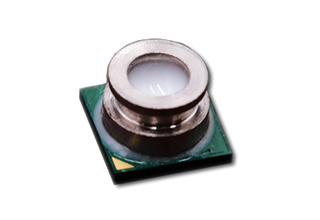
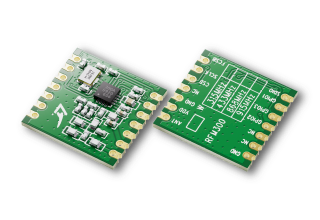
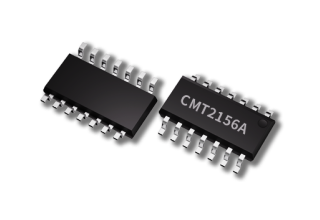


In the era of the Internet of Things (IoT), everything is given the "vitality" of perception and communication. Whether it is a towering skyscraper or a magnificent bridge spanning rivers and seas, they can achieve seamless interaction between "things and things, and things and people" by configuring IoT technology. This allows managers to quickly obtain the current health status, expected lifespan, and environmental conditions of these buildings, thereby achieving real-time status perception, early warning of risks, and precise and efficient operation and maintenance.

Among them, the LoRaWAN protocol, as the most typical long-range wireless interaction solution in the Internet of Things industry, can not only greatly improve the transmission distance and anti-interference capability of digital information interaction through CSS spread spectrum modulation technology, but also has the flexibility of adjustable channel bandwidth, signal coding rate and signal transmission and reception mechanism. It is one of the communication solutions for building a large-scale, fast-response and cost-friendly building sensing network at present.
For example, in the field of mega-bridges, bridges spanning rivers and seas typically have complex structures and are exposed to environments continuously affected by wind pressure, temperature, tides, and corrosion, placing extremely high demands on the transmission distance, stability, and timeliness of monitoring and maintenance systems. By deploying sensors integrating LoRaWAN modules at key locations such as main cables, bridge towers, suspenders, and bridge decks, which measure strain, acceleration, displacement, temperature, humidity, and corrosion, all-weather data acquisition of the bridge's stress state, structural fatigue state, and environmental conditions can be achieved.

These data are stably transmitted to the monitoring center via the LoRaWAN network and used to identify key indicators such as stress changes, structural life, vibration anomalies, corrosion progress, and temperature gradient changes. This enables early warning of potential risks and helps bridge operators optimize maintenance plans through data analysis, enabling a shift from "periodic maintenance" to "on-demand maintenance" and "predictive maintenance," and significantly reducing field maintenance costs.
In the field of building construction, the monitoring objects relied upon for operation and maintenance include not only structural safety parameters, but also multi-dimensional information such as environmental quality, energy consumption, equipment operating conditions, and safety management. By deploying sensors with integrated LoRaWAN modules on each floor to monitor temperature and humidity, air quality, smoke, water level, illuminance, electricity meters, heat meters, and various equipment operating parameters, continuous monitoring of indoor air quality, energy consumption, public area safety, and equipment operating status can be achieved.

Based on this data, the building management system can automatically adjust the fresh air volume and temperature control strategy of the HVAC system to balance comfort and energy-saving goals; the lighting system can intelligently adjust brightness according to space usage and changes in natural light; and critical systems such as drainage and fire protection can also achieve real-time reporting and linkage response to abnormal events through the LoRaWAN network, thereby significantly improving the overall safety resilience and operational efficiency of the building.
process of supporting the implementation of smart buildings , the communication module, as the core hub connecting the front-end sensors and the back-end management system , directly determines the coverage, transmission reliability, energy consumption level, and overall operation and maintenance cost of the building sensing network . A high-quality LoRaWAN module is not only a " nerve node " that ensures the smooth flow of building data , but also a communication " cornerstone " that drives smart buildings from pilot projects to large-scale applications .
For example, HOPERF's independently developed RFM6601 is a high-performance LoRaWAN module that supports LoRaWAN node features and integrates a general-purpose MCU, RF transceiver, modem, and peripheral devices. It adopts an advanced mixed-signal design, is based on a unique adaptive rate algorithm, and has passed FCC /CE/IC certification . It can significantly extend the battery life of sensor devices and effectively help modern buildings build LoRaWAN sensing networks, enabling real-time data acquisition processes and efficient automated control capabilities.

Based on CSS spread spectrum modulation technology , the RFM6601 possesses inherent anti-multipath interference and penetration capabilities, enabling stable and accurate transmission of digital signals even in low signal-to-noise ratio environments. Furthermore, the RFM6601 offers a rich set of peripheral functions, including multiple general-purpose GPIOs, a 32.768 kHz external crystal oscillator, channel monitoring, high-precision RSSI measurement , and a 12-bit high-speed ADC and DAC.

In terms of transmission performance, the RFM6601 is equipped with a complete LoRaWAN protocol stack, which allows for customization of the spreading factor and bandwidth, enabling long-distance communication over distances of several kilometers or even greater, and can easily traverse various complex environments . Whether it is buildings, public facilities or large-scale infrastructure projects, the RFM6601 can accurately collect and transmit the health data of these buildings to the back-end management and operation system.

LoRaWan Device: Class A
In terms of battery life, the RFM6601 has a transmit current of only 108mA @+22dBm (3.3V) at 433.92MHz, a receive current of only 10mA @433.92MHz, and a sleep current of only 1.3uA. In Class A mode, it does not require wake-up listening (Class A devices automatically open two short receive windows once the uplink transmission is completed), and the device's battery life can cover multiple seasons or even years.

https://www.hoperf.com/service/apply/
If you are interested in HOPERF's LoRaWAN module RFM6601 or other wireless transmission chips/modules, please scan the QR code above or copy and open the link at the end of this article to apply for samples. We will be happy to serve you!