HOT Search
Hot News

Product recommendation
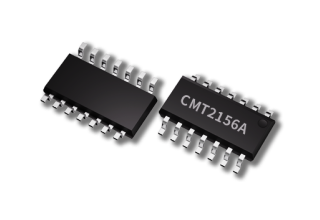


As is well known, capacitive digital isolators have core advantages such as achieving electrical isolation, ensuring system security, and supporting high-speed communication and low-power operation. However, in IoT wireless communication terminals that integrate this type of chip, capacitive digital isolators often cause interference due to the local oscillator radio frequency signal frequency and harmonic frequency falling into the communication frequency band of the IoT wireless communication terminal, resulting in adverse phenomena such as decreased system receiving sensitivity, shorter communication distance, and unstable link.

To address this industry challenge,HOPERF has invented a novel solution—the fixed-frequency isolator. This solution can automatically measure the frequency of a low-frequency RC oscillator during the chip wafer testing (CP) or finished product testing (FT) stage after packaging. Based on the communication system requirements in the customer's product, it can flexibly program the corresponding frequency control signals of the memory unit to adjust the local oscillator frequency and its harmonic frequencies of the isolator chip, so that it avoids the customer's communication frequency band.
HOPERF's fixed-frequency isolator uses a low-temperature drift RC oscillator circuit combined with frequency-locked loop technology. It can measure the low-frequency RC oscillator frequency during wafer testing (CP) or finished product testing (FT). Then, based on the customer's target local oscillator frequency, the frequency configuration parameter of the chip is calculated. Next, the power supply code stream triggers the programming mode, and frequency configuration parameter is written into the chip's non-volatile memory. Ultimately, the chip's local oscillator frequency can be automatically and continuously locked according to the customer's system settings and operating mode. It can also ensure that the chip's local oscillator frequency deviation is less than 3% under different process deviations and across the entire temperature range.
In other words, through the above process, the fixed-frequency isolator can automatically "move" the local oscillator frequency and harmonic frequency of the chip to outside the communication frequency band of the IoT communication terminal without external adjustment after power-on, thus avoiding interference to the communication system from the source and improving the purity and stability of the system signal transmission.
Compared to traditional capacitive digital isolators, fixed-frequency isolators support customization of the chip's local oscillator frequency and harmonic frequency, effectively avoiding the mainstream communication frequency bands used in IoT wireless communication terminals (such as the Sub-GHz band where Wi-SUN and LoRaWAN are located; and the 2.4GHz band where BLE and Wi-Fi are located), thereby avoiding poor reception phenomena such as co-channel interference, adjacent channel interference, and modulation misjudgment.
It is worth mentioning that HOPERF's independently developed fixed-frequency isolator solution has also applied for an invention patent, "A method for eliminating interference of isolator chip radiation to radio frequency system", with the State Intellectual Property Office (hereinafter referred to as "SIPO"), and has been officially granted the invention patent right by SIPO, with the authorization announcement number CN120567172B.
The HOPERF Isolator team stated that the fixed-frequency isolator project can not only solve the signal interference problem caused by the integration of capacitive digital isolators in IoT wireless communication terminals in fields such as smart meters, smart green electricity systems, and even smart cities, effectively filling the market demand for digital isolators with good radio frequency communication compatibility, but also inject multiple driving forces into the enterprise's digital isolator "engine" from the technical, commercial, brand, and industry levels.
Furthermore, at the 2025 World Internet of Things Expo (IoT Expo), one of the most renowned and influential professional events in the global IoT field, HOPERF' fixed-frequency isolator project won the "2025 World Internet of Things New Technology, New Application and New Model Achievement Industry Pioneer Award," effectively demonstrating HOPERF' R&D strength in the field of isolator chips .
It is reported that the "New Technologies, New Applications, and New Models" achievement selection activity (also known as the "Three New" selection activity) of this year's Internet of Things Expo is open to the world and planned in accordance with the principles of "leading the trend, authoritative evaluation, and diverse forms". More than 800 projects were collected from Fortune Global 500 companies, China 500 companies, listed companies, unicorn companies, specialized and innovative "little giant" companies, as well as well-known universities, research institutes and other institutions to enter the candidate pool. In the end, only 50 projects can stand out from them.

https://www.hoperf.com/service/apply/
If you wish to evaluate the effectiveness of this fixed-frequency isolator solution in your own products, please scan the QR code above or copy and open the link at the end of the article to apply for a sample. HOPERF will provide you with technical support and testing guidance to help next-generation IoT products achieve more stable, reliable, and longer-range wireless communication.